Rigid Flex Boards
Rigid flex boards are becoming increasingly popular in the manufacture of wearable technology. This is because they are lightweight and flexible enough to comfortably wrap around the wrist and contain sensors that track health metrics, such as heart rate or steps taken. They also allow for greater component density and can be designed to fit within small or irregularly shaped spaces.
Rigid-flex PCBs combine rigid and flexible circuit boards into a single unit, and they can be made to fold and bend, which is ideal for small or awkwardly-shaped devices such as portable medical equipment. These can include insulin pumps, CPAP machines, or handheld devices used by doctors and nurses. Rigid flex PCBs are also common in consumer electronics, such as TV remote controllers, washing machines, solar power systems, or even electric vehicles.
However, due to the complex nature of a rigid flex board and its blend of rigid and flexible elements, they are more difficult to design than traditional rigid-only PCBs. This is because a rigid-flex design must be able to handle both mechanical and electrical challenges. The unique combination of materials and manufacturing techniques involved in rigid-flex design creates several critical considerations that must be carefully managed.
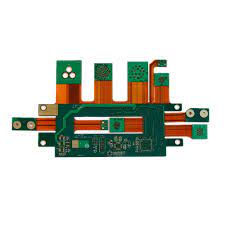
Rigid Flex Boards and Wearable Technology
First, the layout and routing of components on a rigid-flex board must take into account the mechanical shape of the device. This can be accomplished by using a detailed PCB calculator such as the one offered by PCBway, which is capable of providing a 3D model of the entire circuit assembly. It is also necessary to ensure that the circuits on both rigid and flex areas of the PCB are properly connected, which may require the use of specialized soldering and bonding techniques.
The next challenge is ensuring that the rigid-flex circuit can withstand repeated bending and folding without mechanical failure. This can be achieved by evaluating the number of flex cycles that are needed for the application and designing the flex sections accordingly. This might involve increasing the flex cycles, adjusting the layout to distribute stress more evenly across the flex areas, or incorporating strain relief features at the flex-to-rigid transitions.
Finally, the rigid-flex PCB must be able to withstand environmental stresses. This can be achieved by using environmentally friendly materials, minimizing the amount of copper that is plated on the flex sections, or utilizing a thermally conductive cover-lay material to improve heat transfer between rigid and flex areas.
Rigid-flex PCBs are more expensive to produce than their rigid-only counterparts, and they require a high level of design precision to maintain electrical performance over the flex areas. This requires advanced fabrication tools and close collaboration between designers and fabricators to ensure that the final product will meet or exceed expectations. In addition, the integration of rigid and flex sections may require specialized testing and inspection equipment. This can increase development costs and time to market.