Get a Good Piano Transcript
There is an ongoing debate in the music industry on whether or not it’s more beneficial to learn piano by ear than from sheet music. The main reason students take up the instrument in the first place is to eventually play music – and without knowing how to read music, this process is entirely dependent on replicating sounds by memory, which is not necessarily easy.
Reading music allows the composer’s musical thoughts to be brought to life on the piano and helps the student understand their piano on a deeper level. It is a valuable skill that unlocks an entire world of possibilities, just like computers have done for mathematics.
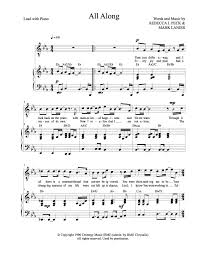
The ability to read music can help a pianist deconstruct their favourite songs, allowing them to discover the underlying structure that makes it work so well. It is a valuable tool in developing and refining their piano technique, as it helps them understand how to play faster, and with more accuracy.
https://tartalover.net/nicole-pesce
How to Get a Good Piano Transcript
Ultimately, the key to learning to read music is to break it down into small chunks and work from there. If a piece of music is too complicated or if the tempo is very fast, it’s better to work on smaller sections at a time – this will give you more success in learning it rather than trying to tackle the whole thing at once.
To begin with, students should focus on learning the different symbols used in music, and how they are interpreted. This includes learning the musical alphabet, which is the system of seven letters that correspond to different pitches on the piano. It also includes learning the different durations of notes – from whole to half, to quarter – as these will all change how long a note is played for.
https://m.youtube.com/@tartalover2682/videos
Students should then learn about chords, which are groups of notes that must be played at the same time. The most common chords are major and minor, but there are other types as well. Each of these chords have their own unique sound, and understanding the relationships between them is essential to playing them.
Finally, students should also start to look at other information on the sheet music such as tempo and key signature. This is important for interpreting the speed at which the piece should be played, and how dramatic shifts in pitch might be.
Learning to read music takes time and effort, but if it is incorporated into regular piano practice and understood as an essential part of the process of becoming a musician, it can be very worthwhile. Taking the time to read the music that you are playing on the piano will allow you to understand it more fully and will improve your ability to play by ear as well. With a bit of dedication and perseverance, you will soon be able to use your music to tell a story that is uniquely yours!